 AnyTime News
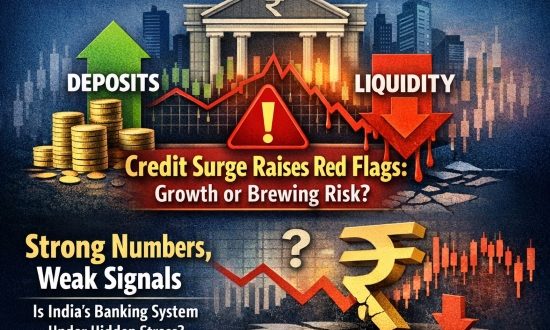
Rising Deposits, Falling Liquidity: Cracks Emerging in Banking Stability
Strong Numbers, Weak Signals: Is India’s Banking System Under Hidden Stress?
Anytime News Network (Pooja Srivastava)
The latest data on India’s banking system presents a mixed and increasingly concerning picture. While deposits continue to rise, underlying indicators suggest growing stress within the system.
As of March 15, 2026, non-bank deposits remain above ₹25 lakh crore, indicating strong public confidence in banks. However, bank credit has also surged past ₹20 lakh crore, raising concerns about the sustainability and quality of lending growth.
A key concern is the decline in cash reserves and balances with the Reserve Bank of India, signaling tightening liquidity conditions. Although borrowings from the RBI have reduced, experts warn that this may not necessarily reflect strength but rather constrained liquidity management.
Fluctuations in food credit further point to instability in financing critical sectors like agriculture and public distribution. Additionally, a sharp rise in “other liabilities” raises questions about transparency and risk exposure within the system.
Experts caution that if the gap between deposits and credit continues to widen, it could strain the banking system and increase the risk of future defaults. Regulatory vigilance and timely intervention will be crucial to maintaining financial stability.
In essence, while the headline numbers suggest resilience, the underlying trends hint at potential vulnerabilities that cannot be ignored.