 AnyTime News
Census 2027 Goes Digital: Efficiency Push Meets Data Security Concerns
Self-Enumeration Model Raises Questions Over Accessibility and Digital Divide
Anytime News Network Pooja Srivastava
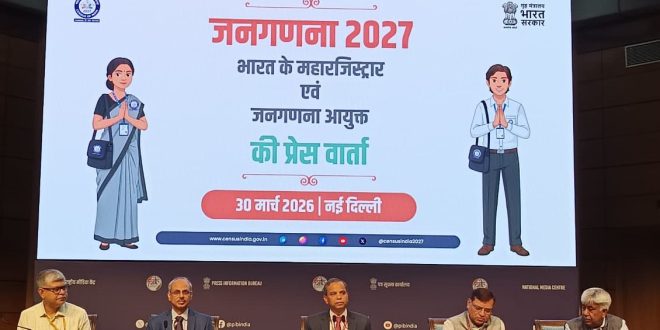
, 2026: India is set to launch Census 2027, marking the 16th Census overall and the 8th since Independence. While officials project it as a technologically advanced and streamlined exercise, concerns around execution and inclusivity continue to surface.
Addressing the media, Registrar General and Census Commissioner Mritunjay Kumar Narayan outlined a two-phase strategy. The first phase will involve house listing and self-enumeration between April and August, followed by a 30-day verification process ending in September.
A key highlight is the introduction of digital tools—data collection through mobile applications and a web-based monitoring system. While this move aligns with India’s broader digital governance goals, it also raises critical questions about cybersecurity, data privacy, and the readiness of infrastructure in rural and remote areas.
The inclusion of caste enumeration in the second phase has added a significant political dimension. Analysts believe this could trigger intense debate, given its implications on policy-making, reservation frameworks, and electoral narratives.
The government has attempted to make the process inclusive by offering the self-enumeration portal in 16 languages. However, experts caution that language accessibility alone may not address deeper issues like digital literacy and internet penetration gaps.
Furthermore, the reliance on technology for House Listing Block (HLB) mapping and monitoring could face operational hurdles if backend systems are not robust.
As India prepares for one of its largest data collection exercises, Census 2027 stands at the intersection of innovation and risk. Its success will depend not just on technological adoption but also on addressing structural and socio-political challenges effectively.