 AnyTime News
No Central Data, States Hold Key Role in Law Enforcement Against Crimes
Anytime News Network | Pooja Srivastava
The Government of India has reiterated its commitment to combating human trafficking and sexual exploitation through legislative and institutional mechanisms. According to the Ministry of Women and Child Development, the Immoral Traffic (Prevention) Act, 1956 (ITPA) continues to serve as a key legal framework to address such crimes.
However, the Ministry clarified that no centralized data is maintained regarding the number of women entering prostitution or those detained for begging. It emphasized that “police” and “public order” fall under the jurisdiction of state governments, making them primarily responsible for enforcement and investigation.
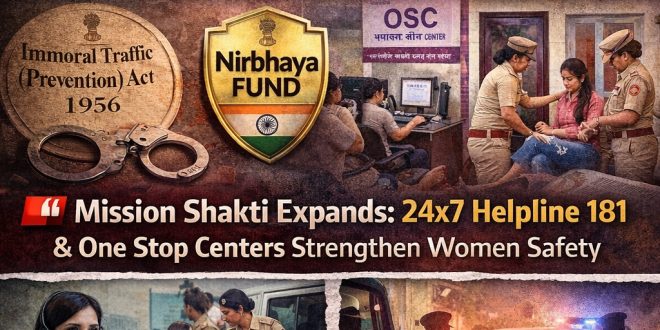
A major pillar of the government’s approach is the Mission Shakti initiative, aimed at enhancing women’s safety and empowerment nationwide. The scheme operates through two components—‘Sambal’ for safety and ‘Samarthya’ for empowerment.
Under ‘Sambal’, One Stop Centers provide integrated support services including medical aid, legal assistance, shelter, and psychological counseling for women in distress. The Women Helpline (181) ensures round-the-clock assistance and is integrated with the Emergency Response Support System 112 for faster response.
Meanwhile, ‘Samarthya’ focuses on rehabilitation through facilities like Shakti Sadan, offering safe shelter and recovery support, particularly for trafficking victims.
The government has also established the Nirbhaya Fund to finance safety-related initiatives, including Safe City Projects in major metros, Anti-Human Trafficking Units (AHTUs), Women Help Desks in police stations, forensic upgrades, and Fast Track Special Courts for cases under rape and POCSO laws.
Minister of State Savitri Thakur informed the Lok Sabha that these efforts aim to ensure stronger protection, faster justice, and better support systems for women.
While the Centre provides policy direction and funding, effective implementation remains largely dependent on states and local administrations.