 AnyTime News
Delegation Led by Co-Chair Hasan Yaqoob Highlights Pain Points of MSMEs, Startup and Small Businesses
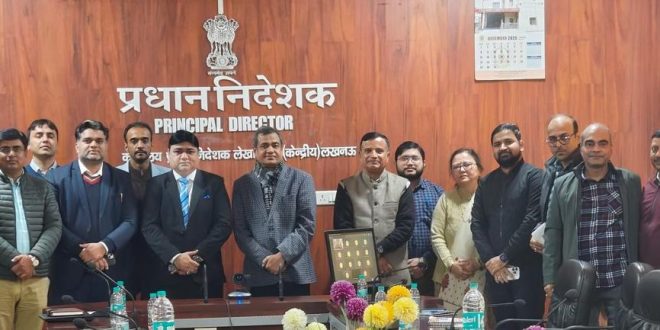
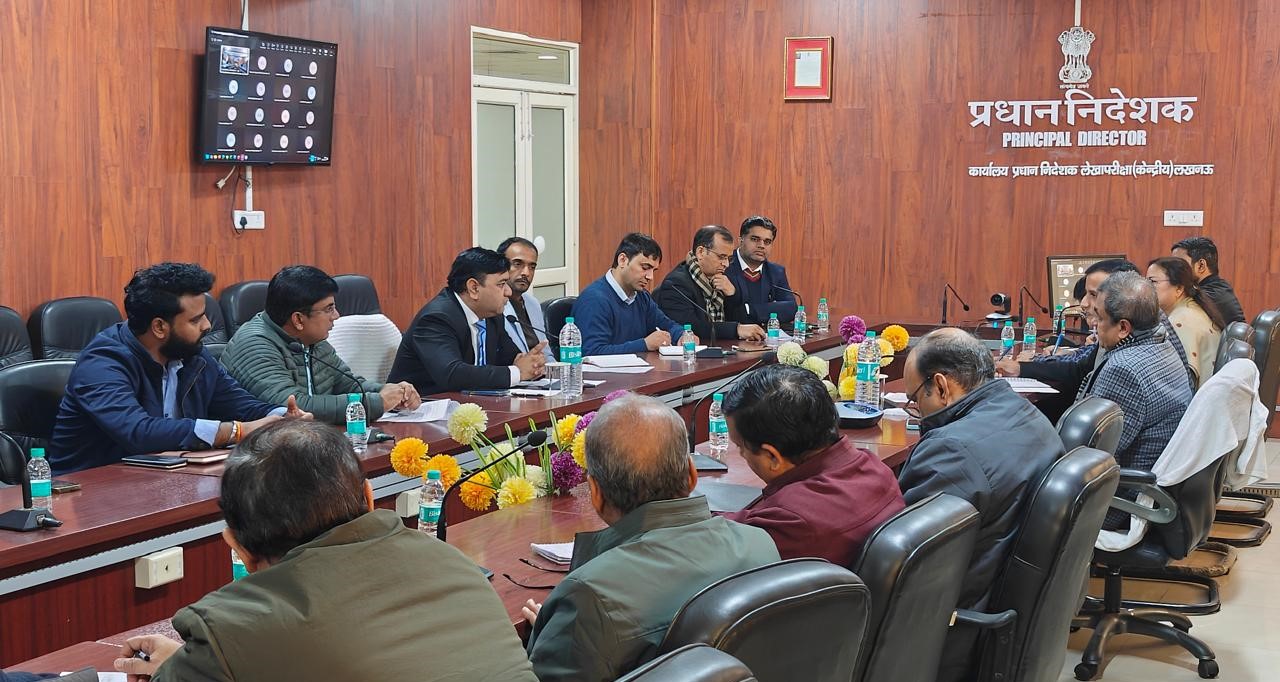
Anytiem News Network – In a significant stakeholder engagement meeting with the Office of the Comptroller and Auditor General of India, Lucknow, the ASSOCHAM Uttar Pradesh Development Council presented critical ground-level compliance challenges faced by small businesses, MSMEs, and artisans under the GST regime.
The delegation, led by Mr. Hasan Yaqoob, Co-Chair, ASSOCHAM UP Development Council, met with Shri Sanjay Kumar, Principal Director (Commercial), CAG, as part of CAG’s nationwide audit on Ease of Doing Business initiatives in GST.
Mr. Yaqoob highlighted that documentation burdens and compliance complexities continue to create anxiety among small businessmen. “Many small traders and artisans remain hesitant to register for GST due to fear of complications, penalties, and overwhelming paperwork. While the younger generation is increasingly willing to embrace digital compliance, the older generation’s apprehension is preventing business formalization and expansion,” he stated.
 Key Issues Raised
Input Tax Credit Delays: MSMEs face ITC blockages taking 6-8 months to resolve due to supplier compliance dependencies, severely impacting working capital. “For small manufacturers operating on thin margins, this creates severe liquidity crises,” stated Mr. Sheikh Mohammad Tariq, Managing Director, Ensky Ventures Private Limited.
Penalty Relief: The delegation advocated for periodic amnesty schemes, noting that ₹50 per day late fees accumulate quickly for businesses facing genuine operational challenges or technical glitches.
Supplier Defaults: Despite Supreme Court guidance, buyers continue facing ITC reversals due to supplier defaults. “A manufacturer cannot be expected to monitor whether his 50 suppliers have deposited GST. The onus should be on tax authorities to recover from defaulters, not penalize compliant recipients,” Mr. Rishabh asserted.
Interstate Trade Barriers: Numerous artisans avoid GST registration due to compliance fears, losing interstate trade opportunities. The delegation recommended increasing the composition scheme threshold from ₹1.5 crore to ₹3 crore and allowing B2B transactions under simplified procedures.
Compliance Burden: Multiple return filings and complex reconciliation processes create disproportionate burdens. The delegation called for a single unified return system with auto-populated data.
Recommendations for GST 2.0
ASSOCHAM presented a comprehensive roadmap including deadline flexibility for businesses below ₹10 crore turnover, time-bound ITC processing with provisional credit mechanisms, protection for recipients when suppliers default, simplified compliance through unified monthly returns, enhanced composition scheme limits, streamlined startup exits, clarity on financial credit notes, and transparent tender evaluation incorporating statutory taxes.
Collaborative Approach for Reform
“This engagement represents the spirit of cooperative federalism that GST embodies. With 3.16 crore MSMEs registered under GST contributing 30% to India’s GDP and nearly 50% of exports, getting GST right is critical for India’s economic growth,” Mr. Yaqoob concluded.
Mr. Yaqoob added, ” UP is all set to touch 21 lakh mark in terms of GST assesses, has immense potential. Simplifying GST compliance will unlock entrepreneurial energy and position the state as a manufacturing and investment hub.”