 AnyTime News
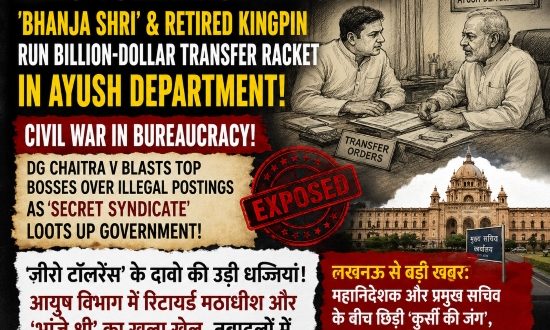
Retired Power Brokers Still Pulling Strings? Fresh Questions Over Transfers and Postings
Pooja Srivastava | Any Time News Network
Lucknow: Uttar Pradesh’s much-publicized “zero tolerance” governance model has come under fresh scrutiny after a major controversy erupted inside the Ayush Department over recent transfer and posting orders. What began as an administrative disagreement has now turned into a full-blown institutional conflict, exposing deep divisions within the department.
The controversy intensified when Ayush Director General Chautra V formally wrote to the Chief Secretary seeking cancellation of recently issued transfer orders. In her communication, she reportedly argued that the transfer policy for 2026-27 was not followed and that mandatory approval from the department head had been bypassed.
The move has triggered serious questions about how transfers were processed and whether established administrative procedures were ignored. Department insiders claim that some employees were transferred within a year of their previous posting, while others have continued to occupy the same positions for more than a decade.
Adding further fuel to the controversy are allegations that influential retired figures continue to wield significant influence over transfer and posting decisions. Dr. S. Ahmad has alleged that individuals who have already retired remain active behind the scenes and continue to influence key administrative decisions. These allegations have not been independently verified, but they have intensified debate within bureaucratic circles.
Meanwhile, officials associated with the directorates insist that all transfer decisions were made in accordance with existing government orders and administrative guidelines. However, the silence of senior officials on the issue has only fueled speculation and political chatter.
Observers note that the dispute is no longer just about transfers. It has evolved into a larger battle over administrative authority, procedural transparency, and control within the department. The fact that the Director General chose to escalate the matter directly to the Chief Secretary suggests that tensions have reached an unusual level.
The episode has also provided ammunition to critics who argue that governance claims must be matched by transparency and accountability at every level of administration. Whether the controversy results in an official review or further action remains to be seen, but for now, the Ayush Department finds itself at the center of a growing storm over transfers, influence, and bureaucratic power.
As questions continue to mount, the controversy is likely to remain a subject of intense discussion within both political and administrative circles.