 AnyTime News
RBI Holds Rates, But Inflation Storm Looms Large
“https://anytimenews.live/wp-content/uploads/2026/06/PR386E3EF62B419E04A85ABE96B0EB8BAC99A.pdf” download=”all”]
Pooja Srivastava | Any Time News Network
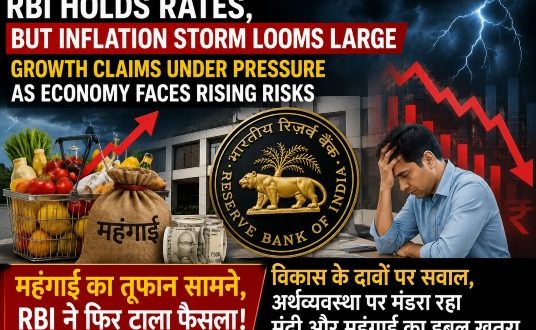
While millions of Indians continue struggling with rising living costs, the latest monetary policy announcement from the Reserve Bank of India (RBI) has brought little comfort. The Monetary Policy Committee (MPC) decided to keep the repo rate unchanged at 5.25%, a move officially described as “prudent and cautious.” However, beneath the official optimism lies a worrying economic picture filled with inflation fears, slowing growth, and growing uncertainty.
The RBI Governor openly acknowledged that geopolitical tensions in West Asia, disrupted global supply chains, and surging energy prices are creating fresh challenges for economies worldwide, including India. While the central bank insists that India remains resilient, its own projections suggest that tougher times may be ahead.
One of the biggest concerns is inflation. RBI now projects average inflation at 5.1% during 2026-27, with the third quarter expected to touch 5.9%, dangerously close to the upper tolerance band. Rising crude oil prices, higher fuel costs, and increasing prices of industrial inputs are expected to pass through to consumers in the coming months.
The warning signs are already visible. Petrol and diesel prices have increased, global crude prices remain elevated, and wholesale inflation has surged sharply. For households, this could mean more expensive transportation, cooking fuel, groceries, and daily essentials.
Another major threat comes from the weather. RBI has highlighted concerns about a below-normal southwest monsoon and potential El Niño conditions. If rainfall disappoints, agricultural output could suffer, food prices may rise, and rural demand could weaken further.
Economic growth is also expected to lose momentum. After recording 7.6% GDP growth in 2025-26, RBI now forecasts growth of only 6.6% in 2026-27. Although still respectable by global standards, the downgrade reflects increasing pressure from higher costs, supply disruptions, and global economic weakness.
Investor confidence appears to be facing strain as well. According to RBI data, foreign portfolio investors (FPIs) have withdrawn nearly $13.7 billion from Indian markets during the current financial year so far. Such outflows often indicate rising risk perception among international investors.
The central bank has announced several measures aimed at attracting foreign capital, including easing investment norms and offering incentives for foreign currency inflows. Yet critics argue that these measures themselves reveal concerns about maintaining external financial stability in an increasingly volatile environment.
Even the banking sector is showing signs of pressure. While overall financial health remains stable, profitability growth has moderated compared with last year. Banks are facing tighter margins and a more challenging operating environment.
The broader message emerging from the policy statement is difficult to ignore: inflation risks are rising, growth is slowing, foreign investors are pulling money out, and weather uncertainties threaten food security. Despite repeated assurances of resilience, the RBI’s own assessment suggests that India’s economy is entering a period where caution may matter more than celebration.
The coming months will determine whether policymakers can successfully navigate these mounting pressures—or whether households and businesses will bear the cost of another challenging economic cycle.