 AnyTime News
Software services, remittances and business consulting dominate overseas receipts, exposing the economy to external shocks
Pooja Srivastava / Anytime News Network
India’s latest data on invisibles receipts presents a mixed picture. While the figures underline the strength of the country’s services economy and overseas income channels, they also reveal significant dependence on a handful of sectors. Invisibles receipts stood at US$162.986 billion in April-June 2026, while the total for FY2025-26 was recorded at US$631.620 billion.
Software Dominates
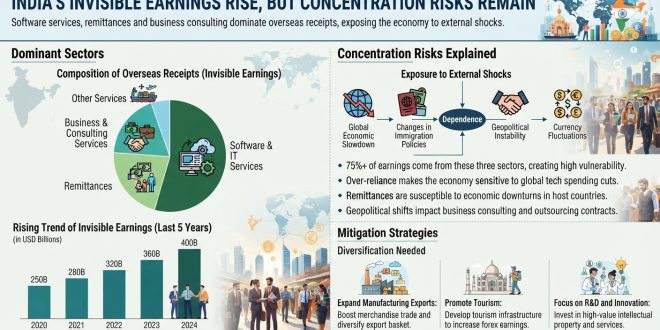
The strongest component remains telecommunications, computer and information services. Receipts from this category reached US$52.009 billion in April-June 2026, of which software services alone accounted for US$51.384 billion.
The numbers demonstrate India’s global technology strength, but the concentration also raises questions. Heavy dependence on international technology demand leaves the earnings stream vulnerable to global IT spending cycles, outsourcing trends and economic slowdowns in major markets.
Remittances Remain Crucial
Private transfers provide another major pillar. The category generated US$43.756 billion during April-June 2026. Within this, inward remittances from Indians abroad for family maintenance and savings amounted to US$30.515 billion.
The scale highlights the continuing importance of overseas Indian earnings. At the same time, dependence on external employment conditions means changes in global labour markets can potentially affect this important source of foreign income.
Consulting Takes a Large Share
Other business services also show considerable concentration. Receipts from the category stood at US$32.805 billion during the quarter, while professional and management consulting services contributed US$25.435 billion.
The Hidden Vulnerability
The data therefore tells two stories. India has built powerful foreign-earning capabilities, but a substantial portion remains concentrated in software, professional services and remittances.
The immediate challenge is not merely to increase invisibles receipts, but to broaden their base and reduce exposure to external shocks. Greater diversification into health services, education, intellectual property, tourism, specialised manufacturing-linked services and other high-value activities could make the foreign-income structure more resilient.
For policymakers, the warning is clear: strong numbers today should not obscure concentration risks that could become more visible when global conditions turn adverse.