 AnyTime News
₹220 Charged for a Bottle Marked ₹210, Consumer Raises Questions Over Enforcement
Transaction Record Produced, But Complainant Asked for Additional Proof Linking Payment to Bottle
Pooja Srivastava | Anytime News Network
Allegations of overcharging at liquor outlets in Uttar Pradesh’s capital have raised serious questions over consumer protection and the effectiveness of excise monitoring. A complainant claims that a liquor bottle carrying a marked price of ₹210 was sold for ₹220, with the additional amount allegedly collected through a QR-code-based digital payment.
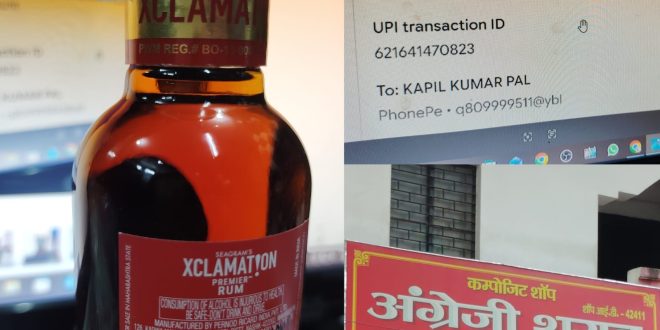
₹210 Marked, ₹220 Collected
According to the complainant’s account, the alleged incident took place on August 4, 2026, at around 8:04 PM. The transaction number cited in the complaint is 621641470823. The complainant maintains that although the bottle displayed a price of ₹210, the retailer collected ₹220 through digital payment.
Complaint Reaches Excise Authority
The complainant says that the bottle and transaction details were subsequently shown to District Excise Officer Karunendra Singh. According to the complainant, the officer questioned whether the payment record alone could establish that the ₹220 payment was made specifically for the bottle in question.
The complainant was reportedly asked to provide additional photographic and video evidence before action could be considered.
A Larger Question of Accountability
The episode raises a broader question: when a consumer presents a product carrying a marked price along with a digital transaction record, how should the enforcement mechanism independently verify the complaint?
Rather than leaving consumers to establish every link themselves, a transparent verification process could examine the outlet’s sales records, digital payment trail, product details and other available evidence.
Need for Transparent Investigation
Allegations of overcharging are not merely a dispute between a retailer and a customer. They directly concern consumer rights and the credibility of regulatory oversight. If proven, such practices can undermine confidence in the system; if unproven, a transparent investigation can establish the facts and protect all concerned parties.