 AnyTime News
Anytime News Network
By Pooja Shrivastava
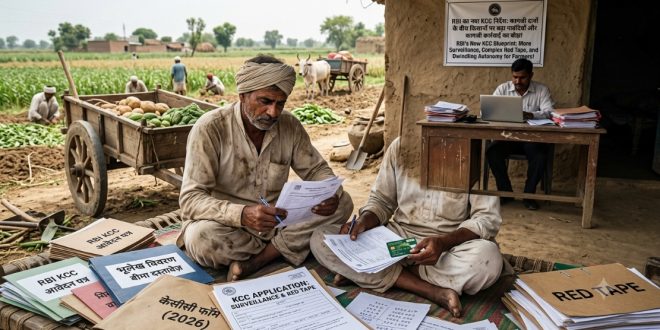
The Reserve Bank of India (RBI) has unveiled its comprehensive Directions for the Kisan Credit Card (KCC) Scheme, slated to take effect from January 1, 2027. While policymakers promote this as a streamlined fintech-driven upgrade, a deeper analysis reveals a worrying narrative of shifting goalposts. Under the guise of digitalization, the banking regulator is introducing aggressive monitoring, stringent conditionalities, and rigid compliance traps that could push vulnerable farmers further to the margins.
The 6-Year Trap: Rigid Credit Ceilings and Financial Bottlenecks
The guidelines introduce a rigid six-year composite tenure tied to a strict Composite Maximum Permissible Limit (CMPL). By hard-coding the credit availability over a multi-year horizon, the policy strips away the banking system’s flexibility to respond to inflation or sudden economic shocks. For an agrarian community highly vulnerable to climate shifts, this mechanical cap risks freezing credit limits when farmers need desperate top-ups.
Tech-Driven Deductions to Shrink Take-Home Loan Amounts
The drawing limit calculation now factors in high-tech expenses like drone-based crop surveys, satellite monitoring fees, software subscriptions, and insurance premiums.
Sector experts warn that deducting these heavy charges from the sanctioned loan will drastically reduce the actual liquid cash that reaches a farmer’s hands. Forcing capital-starved smallholders to underwrite expensive corporate agri-tech services through their credit lines is deeply problematic.
Bureaucratic Nightmares for Sharecroppers and Marginal Farmers
While a ‘Flexi KCC’ of up to ₹50,000 is promised for marginal farmers without land collateral, the fine print demands rigorous documentation. Requiring oral lessees and sharecroppers to secure certificates from local administrations or submit formal affidavits opens the floodgates for rural corruption, bureaucratic delays, and harassment by local authorities, effectively locking out the most destitute tillers.
Weaponized Prudential Norms and Relentless Surveillance
The explicit application of strict Asset Classification and Provisioning Directions means that farmers missing timelines due to market crashes will face swift punitive downgrades. Coupled with mandatory ongoing field inspections and end-use monitoring, the KCC is transitioning from a supportive credit tool into an invasive surveillance mechanism that treats distressed farmers with suspicion rather than support.