 AnyTime News
Budget 2026-27 Pushes Digital Trade Facilitation, Tax Certainty and Investor-Friendly Reforms
Policy Reforms Reshape India’s Business Environment
— Anytime News Network | Pooja Srivastava
India’s sustained policy and regulatory reforms over the past decade have significantly transformed the country’s business environment, strengthening its position as one of the world’s most attractive destinations for investment and entrepreneurship. The government’s continued focus on improving the Ease of Doing Business ecosystem is now showing tangible results.
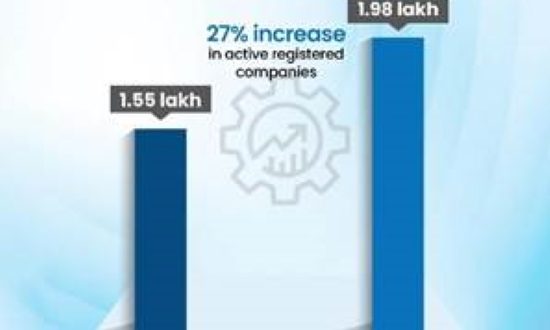
According to official data, the number of business registrations in India has increased from 1.55 lakh in 2020-21 to 1.98 lakh in 2025-26, reflecting a robust 27 percent growth as of February 3, 2026. Analysts say this steady increase signals growing confidence among investors and entrepreneurs in India’s reform-driven economic framework.
The Union Budget 2026-27 has further reinforced this reform momentum by introducing several measures aimed at strengthening the business ecosystem. These include digital trade facilitation, tax certainty, reduction in regulatory disputes, a trust-based customs framework, and an investment-friendly taxation structure. Collectively, these steps are expected to enhance transparency, improve efficiency, and make India more competitive in the global investment landscape.
India’s startup ecosystem has also witnessed remarkable growth. As of February 2026, more than 216,000 startups have been officially recognized by the Department for Promotion of Industry and Internal Trade (DPIIT). Initiatives such as the Startup India program have played a crucial role in encouraging innovation-driven entrepreneurship, particularly among young founders.
Recognized startups benefit from multiple incentives including tax benefits, simplified compliance norms, faster intellectual property rights processing, and improved access to capital. These initiatives have contributed significantly to the development of a vibrant and inclusive innovation ecosystem across the country.
The government has also prioritized the growth of Micro, Small and Medium Enterprises (MSMEs). Credit guarantee schemes and digital credit assessment models have simplified access to financing for smaller businesses, enabling entrepreneurs to expand operations while reducing dependency on collateral-based lending.
Alongside financial and institutional reforms, several regulatory measures have been implemented to simplify compliance and strengthen governance. These include the Jan Vishwas Act, Insolvency and Bankruptcy Code (IBC) reforms, and multiple tax and labour law rationalizations designed to reduce regulatory burdens and promote a trust-based administrative framework.
Experts believe that if India continues on this reform trajectory, it has the potential to emerge as a major global hub for trade, investment, and innovation in the coming years.