 AnyTime News
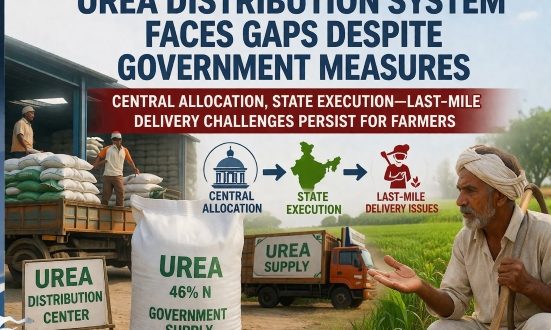
Central Allocation, State Execution—Last-Mile Delivery Challenges Persist for Farmers
Anytime News Network | Pooja Srivastava
India’s urea distribution system continues to face structural challenges, with gaps emerging between central allocation and last-mile delivery. The Department of Fertilizers allocates urea to states on a monthly basis, but intra-state distribution is handled by state governments, often leading to inconsistencies.
Major cooperative bodies like KRIBHCO and IFFCO play a key role in supplying urea to cooperative societies. However, reports of delays and uneven distribution—particularly affecting small and marginal farmers—continue to raise concerns.
To streamline the system, the government has been converting fertilizer retail outlets into Pradhan Mantri Kisan Samriddhi Kendras, with over 38,000 centers already operational. These are intended to act as one-stop hubs for fertilizers, seeds, pesticides, and advisory services.
Additionally, the introduction of a unified “Bharat” brand for subsidized fertilizers and monitoring through the Integrated Fertilizer Management System aim to improve transparency and efficiency.
Despite these reforms, experts argue that the real challenge lies in execution at the grassroots level. Variations in state-level policies and weak coordination often result in supply bottlenecks, leaving farmers vulnerable during critical agricultural cycles.
Unless stronger accountability mechanisms and better coordination between the Centre and states are ensured, the effectiveness of the urea distribution system may remain limited.