 AnyTime News
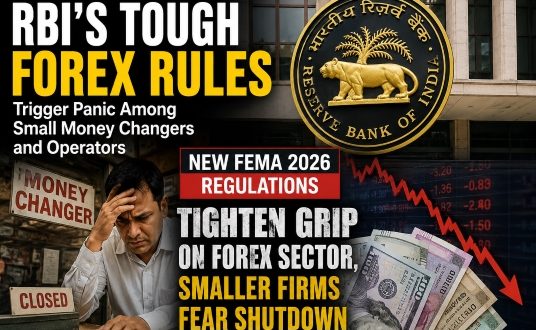
New FEMA 2026 Regulations Tighten Grip on Forex Sector, Smaller Firms Fear Shutdown
Pooja Srivastava | Anytime News Network
The Reserve Bank of India’s newly notified Foreign Exchange Management (Authorised Persons) Regulations, 2026 has sparked concern across India’s forex and money-changing industry. Small operators, independent forex firms and franchise-based businesses believe the stringent compliance norms could severely hurt their survival in the market.
Under the new framework, no entity can deal in foreign exchange without RBI authorisation. More importantly, the central bank has practically closed the door for fresh FFMC (Full Fledged Money Changer) licences except for applications already under process. Industry observers say this move could significantly reduce competition and consolidate the sector into the hands of a few large financial players.
One of the most debated provisions is the steep net worth and turnover requirement. AD Category-II entities must now maintain a minimum net worth of ₹10 crore and achieve an annual forex turnover of ₹50 crore. Smaller businesses argue these conditions are unrealistic for regional operators and could eventually force them out of the market.
The regulations also impose strict “fit and proper” conditions on promoters, directors and key managerial personnel. Any ongoing investigation by the Enforcement Directorate (ED), DRI or other agencies may impact licensing approvals. Critics say this may create an atmosphere of fear and uncertainty for businesses operating in the sector.
Another major concern is RBI’s decision to phase out the franchisee model within two years. Existing franchisees will now need to shift to the Forex Correspondent (FxC) model, which requires additional compliance, reporting systems and operational upgrades. Industry insiders warn this transition could disrupt forex services, especially in smaller towns and semi-urban regions.
While RBI maintains that the objective is to strengthen transparency, curb misuse and improve regulatory oversight, many business groups believe the framework is excessively restrictive. Financial experts caution that overregulation may discourage new investment and reduce market accessibility for smaller enterprises.
Several trade bodies are now demanding a phased implementation and relaxation for small and medium operators to prevent widespread closures and job losses in the forex services ecosystem.